Visa and Mastercard account for 61% of card payment transactions in the euro area, with cross-border payments almost entirely dominated by US institutions.
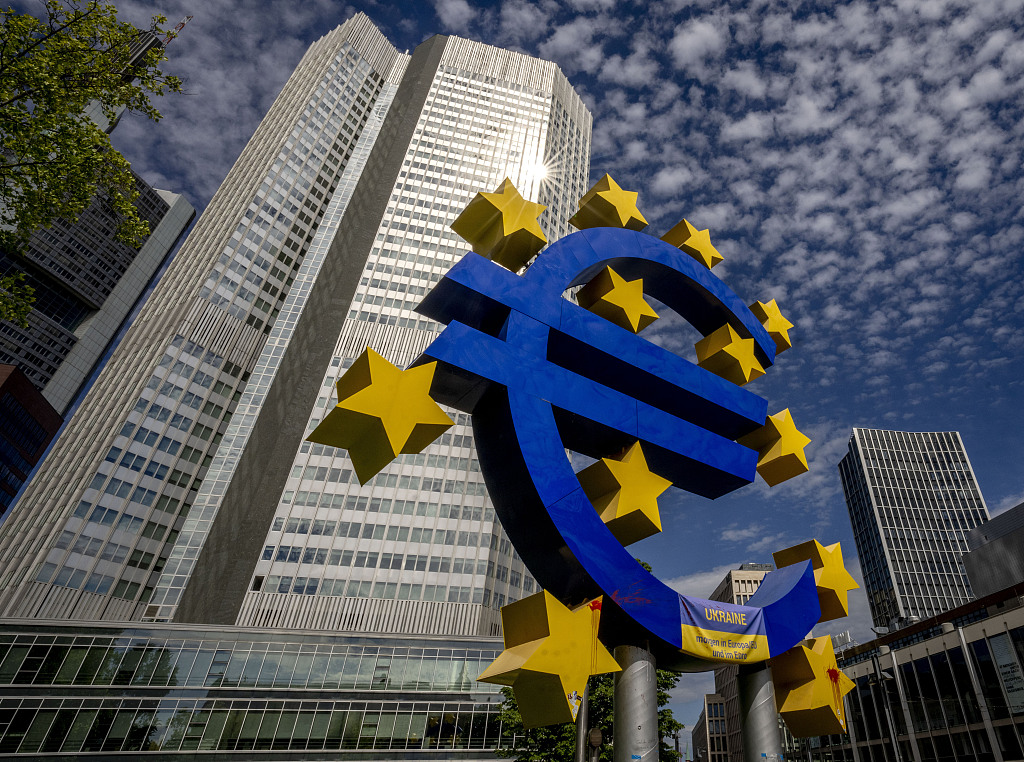
The digital euro will support online and offline payments and emphasize privacy protection. The EU plans to reach a final agreement with member states by the end of the year.
June 23 news — On Tuesday, June 23 local time, the European Parliament’s Committee on Economic and Monetary Affairs approved the long-awaited digital euro plan.
The European Central Bank said in a statement: “We welcome the position reached by the European Parliament’s Committee on Economic and Monetary Affairs on the single currency proposal. This proposal will both safeguard the status of euro cash as legal tender and advance the development of the digital euro.”
Italian Member of the European Parliament Pasquale Tridico said: “The approval of the digital euro regulation is a major victory for European citizens and small and medium-sized enterprises.”
Tridico, who is responsible for negotiating the bill on behalf of the European Parliament’s left-wing group, called the vote a “historic moment.”
The EU hopes to use the digital euro to reduce reliance on payment systems controlled by the United States.
According to European Central Bank data, the two major US payment giants Visa and Mastercard account for 61% of card payment transactions in the euro area, and almost monopolize all cross-border card payment business.
As geopolitical tensions intensify and concerns grow over the EU’s reliance on foreign payment infrastructure, the issue of Europe’s “financial sovereignty” has attracted increasing attention in recent years.
The digital euro is one of the important measures proposed by the EU to strengthen its strategic autonomy. As a central bank digital currency (CBDC) issued and guaranteed by the European Central Bank, the digital euro is intended to complement cash and existing banking services, not replace them.
Under the proposal, consumers will be able to hold digital euros through dedicated digital wallets, but the specific holding limit has not yet been determined.
The system will support both online and offline payments and emphasize a high level of privacy protection. The European Central Bank will not be able to directly identify users through payment data.
The European Central Bank will be responsible for providing the underlying infrastructure, while commercial banks and payment service providers will offer digital euro-related services to customers. Financial institutions will be compensated for participating in the system, while merchants will need to pay relevant fees, which are expected to be lower than existing card transaction costs.
According to people familiar with the negotiations, how to design the compensation mechanism for financial institutions remains one of the most controversial issues in subsequent negotiations between the EU and member states.
The European Parliament is expected to formally confirm the committee’s position at its plenary session in Strasbourg, France, in early July.
Subsequently, the European Union will launch formal negotiations with its 27 member states. Lawmakers aim to reach a final agreement by the end of this year.
The EU is not the only economy advancing a public digital currency. China has already launched the digital yuan, while Russia has announced that the digital ruble will officially enter operation in September 2026.
The United States has taken a different path. U.S. President Trump has abandoned the plan for a central bank digital currency issued by the Federal Reserve and has instead thrown his support behind stablecoin development.
Stablecoins are crypto assets issued by private entities and designed to maintain a stable value.
Because the vast majority of global stablecoins are denominated in U.S. dollars, their supporters argue that this technology could further strengthen the dollar’s international status and expand its use in cross-border payments.
However, some policymakers and former government officials believe that a U.S. central bank digital currency could still return to the agenda in the future.
Last month, Timothy Massad, former chairman of the U.S. Commodity Futures Trading Commission (CFTC), said in a media interview that discussions in Washington about a digital dollar are continuing, and that a digital dollar may ultimately be difficult to avoid.